
Candidates
Effective Interview and Resume Techniques
In today’s competitive job market, mastering the art of interviewing and creating a standout resume is essential for career success. Your resume is your first impression, showcasing your skills, experiences, and qualifications, while the interview gives you the opportunity to expand on these points and connect with potential employers. This section provides practical strategies and tips to improve both your resume and interview performance. Whether you’re entering the job market for the first time or seeking new opportunities, these insights will help you present your best self and increase your chances of landing your desired role.
Topics Covered:
- Top interview tips
- Common interview questions and how to answer them
- Resume/CV writing advice
- Networking strategies
Top Interview Tips
Research the Company
Understand the company’s mission, values, culture, and recent news. This knowledge will help you tailor your responses and ask insightful questions during the interview.Know the Role You’re Applying For
Carefully review the job description and prepare a concise summary of your relevant experience. This shows you’re prepared and helps you align your skills with the role.Practice Common Questions
Prepare answers to frequently asked interview questions. Use the STAR method (Situation, Task, Action, Result) to structure your responses, especially for behavioral questions.Dress Appropriately
Choose attire that matches the company’s culture. When in doubt, business formal is a safe choice.Be Punctual
Arrive 10-15 minutes early to show professionalism and respect for the interviewer’s time.Bring Necessary Materials
Bring extra copies of your resume, a list of references, and a notebook. Being organized shows that you’re prepared and attentive.Show Confidence and Positivity
Maintain good posture, make eye contact, and smile. A positive attitude can leave a lasting impression.Listen Actively
Pay close attention to the interviewer’s questions and comments. This demonstrates engagement and allows you to respond thoughtfully.Ask Insightful Questions
Prepare questions that reflect your genuine interest in the role and the company, such as inquiries about team dynamics or upcoming projects.Follow Up
Send a thank-you email within 24 hours. Express your appreciation for the opportunity and reiterate your interest in the position.Be Authentic
Let your true personality shine. Authenticity is key to building rapport and connecting with your interviewer.
This revised version is more concise and clearer while keeping the essential points intact.
Common Interview Questions
Tell me about yourself.
Summarize your background and highlight relevant experiences.What are your strengths and weaknesses?
Focus on your strengths and discuss how you’re improving your weaknesses.Why do you want to work here?
Demonstrate your knowledge of the company and how your goals align with its mission.Describe a challenging situation and how you handled it.
Use the STAR method (Situation, Task, Action, Result) to structure your response.Where do you see yourself in five years?
Discuss your career goals and how the role fits into your long-term plans.Why should we hire you?
Highlight your unique skills and experiences, explaining how they will benefit the company.How do you handle stress and pressure?
Share techniques or past examples of how you manage stress effectively.Tell me about a time you worked in a team.
Emphasize teamwork, collaboration, and the outcomes you achieved together.What is your salary expectation?
Be prepared to provide a salary range based on industry standards.Do you have any questions for us?
Always have questions ready to demonstrate your interest in the position and company.
Resume/CV Writing Advice
Tailor Your Resume
Customize your resume for each job by highlighting relevant skills and experiences.Choose the Right Format
Use a clean, professional format, such as reverse chronological or functional, depending on your strengths.Use Clear Headings
Organize sections (e.g., Contact Information, Experience, Education, Skills) with clear headings for easy reading.Start with a Strong Summary or Objective
Include a brief statement that highlights your career achievements and what you bring to the role.Quantify Achievements
Use numbers and metrics to show your accomplishments (e.g., “Increased sales by 20%”).Use Action Verbs
Start bullet points with dynamic action verbs like “Developed,” “Led,” and “Implemented” to showcase your contributions.Highlight Relevant Skills
Include both hard and soft skills relevant to the job, and consider adding a skills section.Keep it Concise
For less than 10 years of experience, aim for one page. Two pages are acceptable for more extensive experience.Proofread
Check for spelling and grammar mistakes, and ask someone else to review your resume.Include Keywords
Use job-specific keywords to help your resume pass through Applicant Tracking Systems (ATS).Limit Personal Information
Include only essential contact details. Avoid personal information like age, marital status, or a photo unless required.Use a Professional Email
Ensure your email address is professional and includes your name.
Networking Strategies
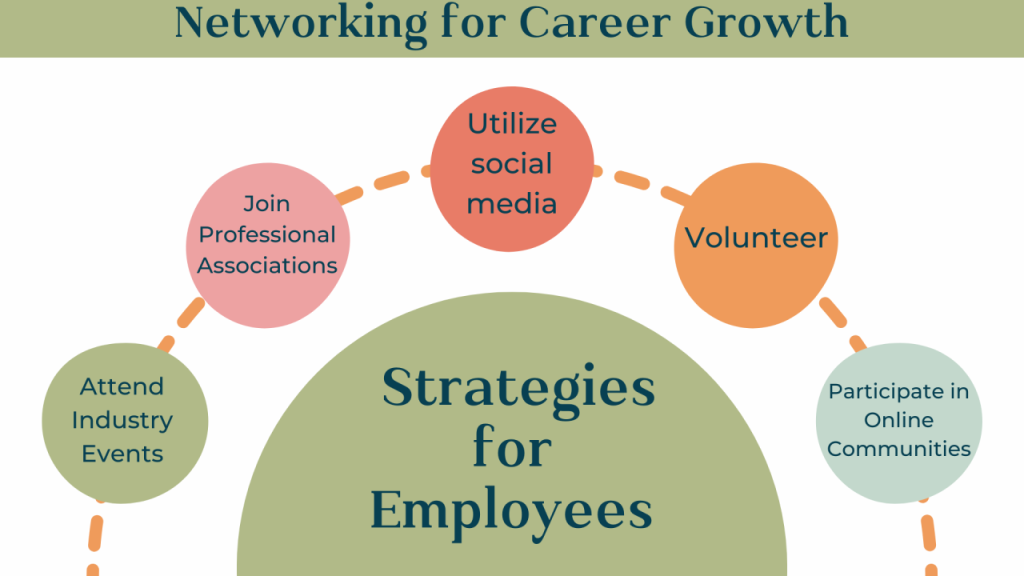
Leverage Social Media
Use LinkedIn and other platforms to connect with industry professionals, share insights, and engage with posts.Attend Industry Events
Participate in conferences, seminars, and workshops to meet people and learn from experts.Join Professional Associations
Become a member of relevant organizations for networking opportunities and resources.Informational Interviews
Reach out to professionals in your field for informal chats about their experiences and career paths.Volunteer or Join Committees
Offer your skills to non-profits or committees to expand your network and enhance your resume.Follow Up
After meeting someone, send a follow-up message to express appreciation and stay connected.Be Authentic
Approach networking with the goal of building genuine relationships, not just seeking opportunities.Use Networking Apps
Explore apps like LinkedIn, Meetup, or Bumble Bizz to find professionals in your area or industry.Attend Alumni Events
Engage with your university’s alumni network for connections and opportunities.Create Value for Others
Share resources, offer assistance, or provide introductions to others. Building a reputation as a helpful contact often leads to reciprocal support.Set Networking Goals
Establish specific goals, such as meeting new contacts each month or following up with existing ones.Email Outreach
Reach out to professionals you admire with a concise message expressing your interest and requesting a brief chat.
By following these strategies, you’ll be well-prepared to create a strong resume, excel in interviews, and build valuable professional relationships.
This question is designed to understand why you’re looking to move on from your current job. Be ready to explain what you’re seeking in your next role that was lacking in your previous one. For example, if you say, “I didn’t have enough access to my manager and lacked support,” be prepared for a follow-up like, “Can you provide an example where you had to make a decision on your own because your manager wasn’t available?” This follow-up will help the interviewer gauge your decision-making skills and assess how much oversight or autonomy you’ll require in the new role.
This is a tricky question that requires a balanced approach. Your answer will show the interviewer not only how tactful you are but also the type of leadership style you work best with—or struggle under. When sharing qualities you admired, focus on traits that align with effective leadership, such as communication or support. When discussing qualities you disliked, be careful to avoid overly negative or personal critiques. Instead, focus on aspects that impacted your growth or productivity, and frame them constructively. Be mindful that mentioning a trait the interviewer values or that aligns with the company culture could affect their perception of your fit for the role.
Though this question sounds simple, your response gives the interviewer insight into what truly motivates you. Are you driven by financial incentives, time off, public recognition, or perhaps opportunities for advancement? If you’re interviewing for a management role, expect a follow-up question like: “How would you reward the good performance of employees who work for you?” The interviewer is looking to see if your management style is consistent with your own preferences. They want to determine whether you practice what you preach or if there’s a disconnect between how you expect to be treated and how you manage others. Misalignment here could indicate a potential cultural mismatch
The interviewer is interested in understanding why the relationship became strained and, more importantly, how you managed the situation. Did you take responsibility for your part in the issue, or did you place the blame solely on your manager? This question is designed to assess your communication style, conflict resolution skills, and ability to handle challenging situations professionally. How you approach this will give the interviewer insight into your accountability and problem-solving capabilities.
When answering this question, be ready for follow-up questions like, “How have you demonstrated integrity in your work?” Integrity is a broad concept, and while many believe they possess it, not everyone understands what it truly looks like in practice. The interviewer is looking for alignment between your words and actions—do you walk the talk? Your answer should reflect a clear understanding of integrity, backed by examples that show how you’ve upheld honesty, accountability, and ethical behavior in your professional life.
Different generations bring unique work habits and strengths to the table. When answering, the interviewer wants to know how well you collaborate with people of different age groups, particularly younger generations. They are assessing your ability to integrate with a diverse workforce and leverage the strengths of each group to achieve organizational goals. The interviewer is also evaluating whether you are a strong team player or simply a leader. Do you have the energy, drive, and attitude to work well with others across generational lines? Your response should highlight how you’ve effectively worked with colleagues of all ages.
The interviewer is looking to confirm that you fully understand the challenges of the role and what will be expected of you if hired. This is your best opportunity to confidently highlight your qualifications, relevant skills, and experience that align with the role. Use this moment to effectively sell yourself by demonstrating how your background and expertise make you the ideal fit for the position.
The interviewer is interested in understanding your preferred work environment and how well you might align with their company culture. This insight is crucial for assessing job satisfaction and overall fit within the organization. They aim to hire someone who is not only dependable but also capable of contributing positively to the team.
Effective preparation for interviews is key, and by considering questions like this, you can better articulate your experiences and preferences.


Top Interview Tips
Research the Company
Understand the company’s mission, values, culture, and recent news. This knowledge will help you tailor your responses and ask insightful questions during the interview.
Know the Role You’re Applying For
Carefully review the job description and prepare a concise summary of your relevant experience. This shows you’re prepared and helps you align your skills with the role.
Practice Common Questions
Prepare answers to frequently asked interview questions. Use the STAR method (Situation, Task, Action, Result) to structure your responses, especially for behavioral questions.
Dress Appropriately
Choose attire that matches the company’s culture. When in doubt, business formal is a safe choice.
Be Punctual
Arrive 10-15 minutes early to show professionalism and respect for the interviewer’s time.
Bring Necessary Materials
Bring extra copies of your resume, a list of references, and a notebook. Being organized shows that you’re prepared and attentive.
Show Confidence and Positivity
Maintain good posture, make eye contact, and smile. A positive attitude can leave a lasting impression.
Listen Actively
Pay close attention to the interviewer’s questions and comments. This demonstrates engagement and allows you to respond thoughtfully.
Ask Insightful Questions
Prepare questions that reflect your genuine interest in the role and the company, such as inquiries about team dynamics or upcoming projects.
Follow Up
Send a thank-you email within 24 hours. Express your appreciation for the opportunity and reiterate your interest in the position.
Be Authentic
Let your true personality shine. Authenticity is key to building rapport and connecting with your interviewer.
This revised version is more concise and clearer while keeping the essential points intact.
Common Interview Questions
Tell me about yourself.
– Assessment: They want to understand your professional background, how well you can summarize your experience, and if you can present a cohesive story.
– Response Tip: Focus on your career path and how it led you to this role. Use a brief timeline: your background, key achievements, and how it aligns with the role you’re applying for. Keep it professional and relevant to the job.Example: “I started my career in marketing, developing a strong foundation in content creation. Over the last three years, I focused on digital marketing, where I led a successful campaign that increased brand engagement by 30%. I’m excited to bring these skills to your team and help drive similar results.”
2. Why do you want to work here?
– Assessment: They want to see if you’ve done your research on the company and are genuinely motivated to join.
– Response Tip: Mention specific things about the company that resonate with you, such as values, products, or opportunities for growth. Align these with your career goals.Example: “I admire your company’s dedication to innovation in sustainable energy. I’m passionate about creating a positive environmental impact, and I believe my skills in project management can contribute to your ongoing projects and mission.”
3. What are your greatest strengths?
– Assessment: They’re looking to see if your strengths align with the role requirements.
– Response Tip: Pick strengths relevant to the job, and provide examples that showcase how you’ve applied these strengths effectively.Example: “One of my greatest strengths is my attention to detail. In my previous role, this skill helped me catch errors in a major report, saving the company significant rework time. I believe this strength will allow me to ensure accuracy and quality in my work here.”
4. What is your biggest weakness?
– Assessment: They’re evaluating your self-awareness, honesty, and willingness to improve.
– Response Tip: Choose a real, work-related weakness and talk about how you’re actively working to improve it. Avoid generic responses like “I’m a perfectionist.”Example: “I tend to be overly critical of my own work. Recently, I’ve been setting realistic milestones and focusing on progress rather than perfection, which has helped me deliver results more confidently.”
5. Describe a time you faced a challenge at work and how you handled it.
– Assessment: They want to know how you handle adversity, adapt, and solve problems.
– Response Tip: Use the STAR method (Situation, Task, Action, Result) to structure your answer and provide a concrete example.Example: “When our team lost a major client, we faced the challenge of making up the lost revenue. I suggested a new outreach strategy targeting similar clients, and we secured two new accounts within three months, recovering the loss.”
6. Tell me about a time when you worked on a team.
– Assessment: They’re assessing your ability to collaborate, communicate, and contribute to team efforts.
– Response Tip: Highlight a specific role you played in a team project and how you helped the team succeed. Focus on collaboration and positive outcomes.Example: “In my last role, our team was tasked with launching a new product. I coordinated with marketing and design to ensure consistent messaging. The project was a success, exceeding sales targets by 20% in the first quarter.”
7. Why are you leaving your current job?
– Assessment: They want to understand your motivations and ensure you’re making a positive career move.
– Response Tip: Keep it positive, focusing on what you’re looking for rather than negatives about your current role. Emphasize growth, alignment, or new challenges.Example: “I’ve enjoyed my current role, but I’m looking for more responsibility and growth opportunities. I believe this role aligns better with my career goals and will allow me to contribute more meaningfully.”
8. Where do you see yourself in five years?
– Assessment: They’re gauging your ambition, stability, and how this role fits into your longer-term goals.
– Response Tip: Share realistic goals and mention how the role can support your growth. Avoid overly ambitious or non-committal responses.Example: “In five years, I see myself as a project leader, ideally here, helping the team innovate and drive impactful projects. I’m excited about the growth opportunities here that align with my goals.”
9. Tell me about a time you failed and how you handled it.
– Assessment: They’re assessing resilience, accountability, and learning from mistakes.
– Response Tip: Choose a real example, explain what you learned, and how you applied it to improve. Show a positive, growth-oriented attitude.Example: “I once misjudged the time needed for a project, causing a delay. Afterward, I began using a project management tool to track deadlines more accurately. It’s helped me deliver projects on time consistently since.”
10. What is your ideal work environment?
– Assessment: They want to see if you’ll thrive in their workplace culture.
– Response Tip: Be honest, but also try to align your ideal environment with the company’s culture. Flexibility, teamwork, or open communication are often good points to touch on.Example: “I thrive in a collaborative, supportive environment where team members feel comfortable sharing ideas. I noticed your company values innovation and teamwork, which really resonates with me.”
11. Describe a time when you disagreed with a coworker and how you resolved it.
– Assessment: They’re evaluating conflict resolution skills, professionalism, and communication.
– Response Tip: Use the STAR method to describe the disagreement and focus on constructive actions you took to resolve it.Example: “A coworker and I had different approaches to a project. I set up a meeting where we both shared our ideas openly. After discussing, we combined elements from both, and the final outcome was a success.”
12. How do you handle pressure or stress?
– Assessment: They want to know if you can stay calm, focused, and productive under pressure.
– Response Tip: Describe specific strategies you use to manage stress, such as prioritization or organization.Example: “I handle stress by breaking down tasks into smaller, manageable steps and prioritizing my workload. During a recent project, I set up check-ins to stay on track and completed it successfully under tight deadlines.”
13. What can you offer us that someone else can’t?
– Assessment: They want to know what unique skills, experiences, or perspectives you bring.
– Response Tip: Emphasize unique strengths or accomplishments that set you apart, and relate them to the job requirements.Example: “With my background in both marketing and data analysis, I can bring a data-driven approach to creative projects. This dual skill set has allowed me to optimize campaigns effectively in previous roles.”
14. Do you have any questions for us?
– Assessment: They’re gauging your curiosity, engagement, and understanding of the role.
– Response Tip: Ask thoughtful questions about the role, team dynamics, or company goals. Avoid questions about salary or benefits at this stage unless the interviewer brings them up.Example: “What are the most important goals for the team over the next six months, and how does this role contribute to achieving them?”
Preparing responses in advance will help you feel confident, allowing you to focus on delivering them clearly and authentically. Good luck!
Resume/CV Writing Advice
Tailor Your Resume
Customize your resume for each job by highlighting relevant skills and experiences.
Choose the Right Format
Use a clean, professional format, such as reverse chronological or functional, depending on your strengths.
Use Clear Headings
Organize sections (e.g., Contact Information, Experience, Education, Skills) with clear headings for easy reading.
Start with a Strong Summary or Objective
Include a brief statement that highlights your career achievements and what you bring to the role.
Quantify Achievements
Use numbers and metrics to show your accomplishments (e.g., “Increased sales by 20%”).
Use Action Verbs
Start bullet points with dynamic action verbs like “Developed,” “Led,” and “Implemented” to showcase your contributions.
Highlight Relevant Skills
Include both hard and soft skills relevant to the job, and consider adding a skills section.
Keep it Concise
For less than 10 years of experience, aim for one page. Two pages are acceptable for more extensive experience.
Proofread
Check for spelling and grammar mistakes, and ask someone else to review your resume.
Include Keywords
Use job-specific keywords to help your resume pass through Applicant Tracking Systems (ATS).
Limit Personal Information
Include only essential contact details. Avoid personal information like age, marital status, or a photo unless required.
Use a Professional Email
Ensure your email address is professional and includes your name.
Networking Strategies
Leverage Social Media
Use LinkedIn and other platforms to connect with industry professionals, share insights, and engage with posts.
Attend Industry Events
Participate in conferences, seminars, and workshops to meet people and learn from experts.
Join Professional Associations
Become a member of relevant organizations for networking opportunities and resources.
Informational Interviews
Reach out to professionals in your field for informal chats about their experiences and career paths.
Volunteer or Join Committees
Offer your skills to non-profits or committees to expand your network and enhance your resume.
Follow Up
After meeting someone, send a follow-up message to express appreciation and stay connected.
Be Authentic
Approach networking with the goal of building genuine relationships, not just seeking opportunities.
Use Networking Apps
Explore apps like LinkedIn, Meetup, or Bumble Bizz to find professionals in your area or industry.
Attend Alumni Events
Engage with your university’s alumni network for connections and opportunities.
Create Value for Others
Share resources, offer assistance, or provide introductions to others. Building a reputation as a helpful contact often leads to reciprocal support.
Set Networking Goals
Establish specific goals, such as meeting new contacts each month or following up with existing ones.
Email Outreach
Reach out to professionals you admire with a concise message expressing your interest and requesting a brief chat.
By following these strategies, you’ll be well-prepared to create a strong resume, excel in interviews, and build valuable professional relationships.
This question is designed to understand why you’re looking to move on from your current job. Be ready to explain what you’re seeking in your next role that was lacking in your previous one. For example, if you say, “I didn’t have enough access to my manager and lacked support,” be prepared for a follow-up like, “Can you provide an example where you had to make a decision on your own because your manager wasn’t available?” This follow-up will help the interviewer gauge your decision-making skills and assess how much oversight or autonomy you’ll require in the new role.
This is a tricky question that requires a balanced approach. Your answer will show the interviewer not only how tactful you are but also the type of leadership style you work best with—or struggle under. When sharing qualities you admired, focus on traits that align with effective leadership, such as communication or support. When discussing qualities you disliked, be careful to avoid overly negative or personal critiques. Instead, focus on aspects that impacted your growth or productivity, and frame them constructively. Be mindful that mentioning a trait the interviewer values or that aligns with the company culture could affect their perception of your fit for the role.
Though this question sounds simple, your response gives the interviewer insight into what truly motivates you. Are you driven by financial incentives, time off, public recognition, or perhaps opportunities for advancement? If you’re interviewing for a management role, expect a follow-up question like: “How would you reward the good performance of employees who work for you?” The interviewer is looking to see if your management style is consistent with your own preferences. They want to determine whether you practice what you preach or if there’s a disconnect between how you expect to be treated and how you manage others. Misalignment here could indicate a potential cultural mismatch
The interviewer is interested in understanding why the relationship became strained and, more importantly, how you managed the situation. Did you take responsibility for your part in the issue, or did you place the blame solely on your manager? This question is designed to assess your communication style, conflict resolution skills, and ability to handle challenging situations professionally. How you approach this will give the interviewer insight into your accountability and problem-solving capabilities.
When answering this question, be ready for follow-up questions like, “How have you demonstrated integrity in your work?” Integrity is a broad concept, and while many believe they possess it, not everyone understands what it truly looks like in practice. The interviewer is looking for alignment between your words and actions—do you walk the talk? Your answer should reflect a clear understanding of integrity, backed by examples that show how you’ve upheld honesty, accountability, and ethical behavior in your professional life.
Different generations bring unique work habits and strengths to the table. When answering, the interviewer wants to know how well you collaborate with people of different age groups, particularly younger generations. They are assessing your ability to integrate with a diverse workforce and leverage the strengths of each group to achieve organizational goals. The interviewer is also evaluating whether you are a strong team player or simply a leader. Do you have the energy, drive, and attitude to work well with others across generational lines? Your response should highlight how you’ve effectively worked with colleagues of all ages.
The interviewer is looking to confirm that you fully understand the challenges of the role and what will be expected of you if hired. This is your best opportunity to confidently highlight your qualifications, relevant skills, and experience that align with the role. Use this moment to effectively sell yourself by demonstrating how your background and expertise make you the ideal fit for the position.
The interviewer is interested in understanding your preferred work environment and how well you might align with their company culture. This insight is crucial for assessing job satisfaction and overall fit within the organization. They aim to hire someone who is not only dependable but also capable of contributing positively to the team.
Effective preparation for interviews is key, and by considering questions like this, you can better articulate your experiences and preferences.